

How to Choose a Hitch Bike Rack for Step Through E-Bikes
Learn how to choose the best hitch bike rack for step-through e-bikes based on weight capacity, hitch class, safety, and convenience with expert tips.
image for illustrative purpose
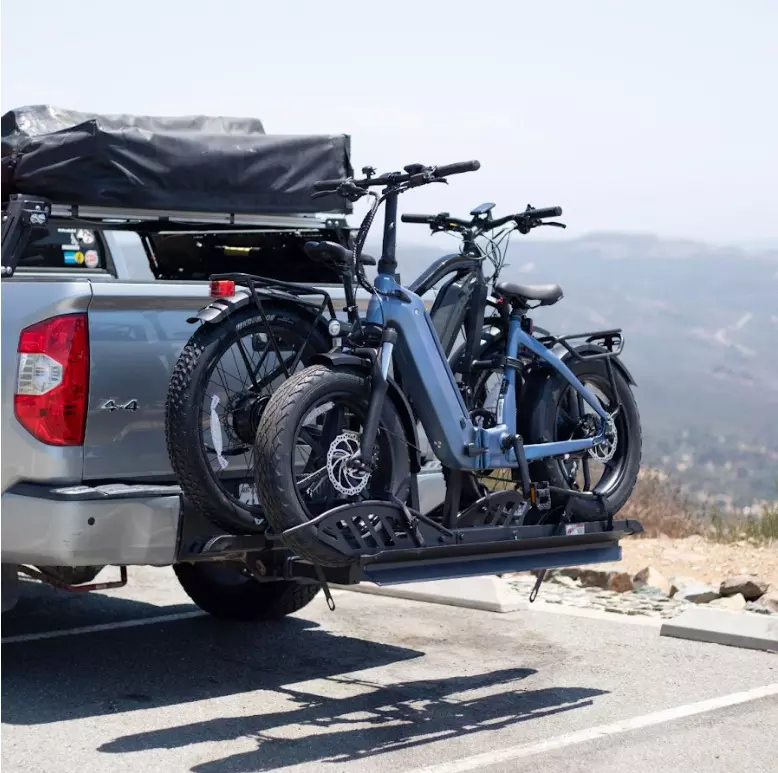
It may be difficult to carry bicycles, especially the heavier ones like step-through e-bikes, without the appropriate equipment. An ebike specific hitch bike rack will keep the bicycles safe, efficient, and will not damage the frame.
The correct selection of an ebike rack depends on the knowledge of the weight capacity, the type of hitch, the compatibility with the vehicle, and the convenient features that make it easier to load and unload. I will provide professional experience in this guide when testing bike racks and collaborating with cycling enthusiasts to offer a practical way of choosing the most suitable solution.
Key Factors to Consider
E-Bike and Maximum Weight
The e-bikes that are step-through weigh more than regular bicycles, averaging between 45 and 70 pounds. The maximum weight capacity of a hitch bike rack should also be considered before buying. The weight of the standard racks ranges between 35 and 60 pounds per bike, and in the case of e-bikes, it is better to use a rack with a weight of 60 to 80 pounds per bike because it is more stable and safer.
Another factor is compatibility of wheel size. Step-through e-bikes can either be wider-tired or with distinct geometries and therefore the ebike rack should support different wheel diameters and widths without affecting balance. There are racks with straps or adjustable trays to have more flexibility.
Hitch Class and Vehicle Compatibility
The type of hitch that your vehicle has defines the racks that can be used. Class I and II hitches are typically limited to lighter loads, to as much as 350 to 500 pounds tongue weight, and might not be sufficient to carry several heavy ebikes.
Class III and IV hitches have greater tongue weight lifting capacities, which are usually between 500 and 1000 pounds. They are perfect for carrying two or more step-through e-bikes.
Rack Design and Security Features
Hitch bike rack design has a great impact on convenience and safety. Platform racks, in which the bikes are placed on the wheels and held in place using adjustable straps or locking arms, reduce the chances of scratches. The tilt or fold systems come in handy when there is access to the back of the vehicle without removing the bikes.
Security is also critical. Find racks that have inbuilt locks to both the bike and the rack. The ebike racks of high quality usually have keyed locks or armored arms which give you the assurance of leaving your vehicle unattended.
Convenience of Installation and Storage
It does not mean that a heavy-duty ebike rack is hard to install. Most platform style racks are tool free and can be folded away when not in use. It comes in handy especially in frequent transportation or small storage space.
Take into consideration the weight of the rack. The steel racks are robust but heavier, whereas the aluminum ones are balanced in terms of durability and the ability to handle them.
Professional testing has identified a number of hitch bike racks that can be used in step-through e-bikes. Thule T2 Pro XT, Yakima HoldUp and Kuat NV 2.0 are all great racks that are platform-style. They have large weight capacities, adjustable trays to suit wheel sizes and the ability to tilt to reach the rear.
The Thule T2 Pro XT is designed to hold bikes up to 60 pounds per tray, and has a tool-free assembly with a self-locking arm, which is why it is a popular choice of ebike rack with heavier electric bikes. Yakima HoldUp also offers such weight support and a secure hitch lock option, whereas the Kuat NV 2.0 is more concentrated on the high-quality construction and has an inbuilt repair stand, which is well-suited to cycling enthusiasts who have to travel with their bikes frequently.
The hanging racks are lightweight, inexpensive, and simple to set up (Saris Bones or the Allen Sports models). They are however not as suggested in heavy steps through e-bikes because of frame stress and weight capacity.
Safe Transport of E-Bikes
Some of the safety measures to consider when transporting step-through e-bikes on a hitch bike rack include:
Make sure bikes are well balanced on the rack in order to avoid swaying during transport.
Additional straps are necessary in some cases particularly when using wide tires or unusual frames.
Measuring of tire pressure and tightening wheel trays prior to each trip.
Check the rack and hitch receiver every now and then regarding wear and tear.
Take out removable batteries or accessories of your e-bike to make it lighter and avoid getting damaged when transporting it.
Conclusion
When choosing the appropriate hitch bike rack to use with step-through e-bikes, it is necessary to pay attention to the weight capacity, the structure of the rack, compatibility with the hitch, and security. The most convenient and safe solution is platform-style racks that have adjustable trays, inbuilt lock system, tilt or fold features.
Considering the hitch category of your vehicle, bike count, and frame geometry of the step through, you will be guaranteed of a stress free and safe transportation experience. The quality of the ebike rack does not only secure your bicycles, but also improves your general riding experience, making each ride safer, more comfortable, and enjoyable.
A good hitch bike rack is a tool you will need in your daily rides or even in long journeys with your ebike, which will provide you with the confidence that your bikes will reach their destinations.
FAQs
How many pounds can an average hitch bike rack hold?
The standard racks are dependent on the model and manufacturer and usually can support 35 to 60 pounds per bike. In the case of step-through e-bikes, a rack with a 60-80 pound per bike rating is safer to use.
Will an e-bike be ruined when it is put on a hitch bike rack?
Platform racks of high quality minimise the possibility of damage since bikes are attached to the wheels rather than the frame. Frames can be scratched by hanging racks, or the straps can be improperly adjusted, especially the step-through frames.
Should there be a tilt or fold feature?
Yes. Fold or tilt features enable one to access the rear hatch without unloading bikes, which makes it more convenient and minimizes the possibility of accidents during transportation.
Are there e-bike racks in all vehicles?
The compatibility will be based on the hitch and tongue weight capacity of the vehicle. Transportation of several heavy e-bikes is suggested to be done using class III or IV hitches.
Is it possible to leave my bicycle on the rack at night?
In the case of the rack containing built-in locks to the bike and the hitch, the bike can be left in a temporary position. Exposure to weather, however, can be detrimental to the bike parts in the long run.





